Hip Mobility: The Key to Better Squats and Less Back Pain
Your hips are the center of almost every athletic movement you perform. Squatting, lunging, running, jumping, and even walking all depend on hips that can move freely through their full range of motion. When hip mobility is limited, the body compensates by asking other joints to pick up the slack. The lower back and knees are the usual victims. Over time, this compensation pattern leads to poor technique, stalled strength, and chronic pain that no amount of foam rolling or stretching alone will fix.
This guide explains why hip mobility matters, how tight hips cause back pain, how to test your own mobility, five drills that actually work, and how to program them into your training. If you have been working on your squat form or dealing with nagging lower back discomfort, your hips are the most likely place to start.
Why Hip Mobility Matters for Everyone
The hip is a ball-and-socket joint designed for a large range of motion: flexion, extension, abduction, adduction, internal rotation, and external rotation. For a healthy squat, you need adequate hip flexion and external rotation. For a strong deadlift, you need hip extension. For running and athletic movement, you need all of these in coordination. When any direction is restricted, movement quality suffers.
Poor hip mobility is not just a problem for athletes. Sedentary adults who sit for hours every day spend most of their time with hips in flexion. The hip flexors shorten, the glutes become underactive, and the hip capsule loses its ability to express full range of motion. This creates a cascade of compensation: the pelvis tilts forward, the lumbar spine arches excessively, and the lower back starts to ache. Many people diagnosed with “tight hamstrings” or “weak glutes” are actually dealing with hip mobility limitations that have been masked by other symptoms.
Improving hip mobility does more than reduce pain. It also improves force production. A muscle that works through a fuller range of motion can generate more force and recruit more fibers. For lifters, this means deeper squats, better deadlift lockouts, and healthier knees. For everyone else, it means easier daily movement and less stiffness.
How Tight Hips Cause Back Pain
The connection between hip mobility and lower back pain is well established in the research. A 2011 study in the Journal of Strength and Conditioning Research found that restricted hip range of motion, particularly hip extension, was associated with increased lumbar motion during athletic tasks. In plain language, when the hips cannot move, the lower back moves instead. The lower back is not designed to be the primary mover for hip-dominant activities, so it becomes irritated.
There are two common compensation patterns. The first is anterior pelvic tilt, often called “duck butt,” where the top of the pelvis tips forward and the lower back arches. This is commonly driven by tight hip flexors and weak glutes. It compresses the lumbar facet joints and can cause pain during standing, walking, and lifting. The second pattern is a posterior pelvic tilt or rounding under load, sometimes called “butt wink” at the bottom of a squat. This happens when hip flexion range is limited and the pelvis tucks under to create more depth. Both patterns place stress on the lumbar spine.
Fixing the problem requires more than stretching the hip flexors. You also need to restore hip extension, strengthen the glutes, and teach the nervous system to control the new range of motion. This is why the drills below combine stretching with activation and movement. Mobility without strength is just flexibility, and flexibility without control is instability.
The Hip Mobility Test You Should Try
Before you start drilling, it helps to know where you stand. Here are three simple assessments you can do at home.
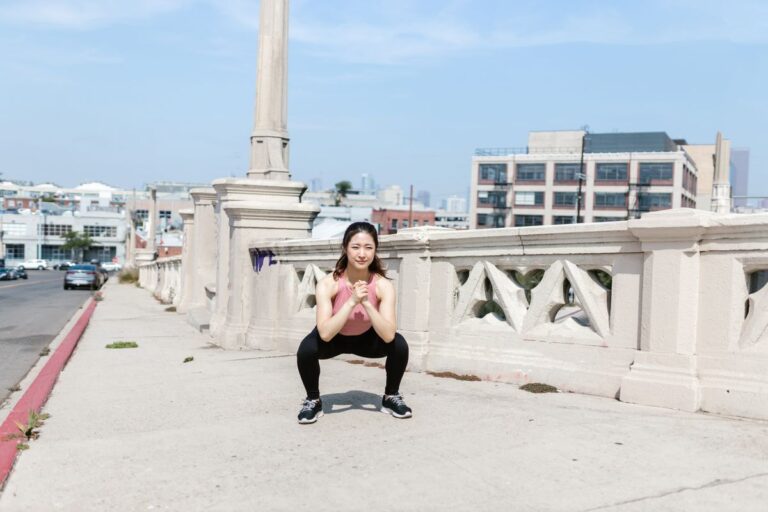
Deep squat test: Stand with your feet shoulder-width apart and toes pointed forward or slightly outward. Keeping your heels on the ground, squat as deeply as you can while keeping your chest up. If your heels rise, your torso falls forward, or your lower back rounds at the bottom, hip mobility is likely limited. A healthy adult should be able to squat to at least parallel with a relatively upright torso.
Thomas test: Sit on the edge of a sturdy table or bench and lie back, pulling one knee to your chest. Let the other leg hang freely. Ideally, the hanging thigh should rest flat on the table with the knee bent to roughly 90 degrees. If the thigh lifts off the table, your hip flexors are tight. If the lower leg swings outward, your TFL and IT band are involved.
Hip rotation test: Sit on the floor with your knees bent and feet wider than your hips. Drop both knees inward as far as you can, then outward as far as you can. Internal rotation should be roughly 35 to 45 degrees, and external rotation should be 45 to 60 degrees. Significant restriction in either direction indicates hip capsule stiffness that should be addressed.
5 Hip Mobility Drills That Actually Work
These five drills target the most common hip restrictions. Perform them as part of your warm-up before squatting or deadlifting, or as a standalone mobility session on rest days.
1. Couch stretch. Place one knee against the base of a wall or couch with the shin vertical. Step the other foot forward into a lunge. Squeeze the glute of the back leg and push your hips forward until you feel a stretch in the front of the hip and thigh. Hold for 60 to 90 seconds per side. This is one of the most effective ways to restore hip extension.
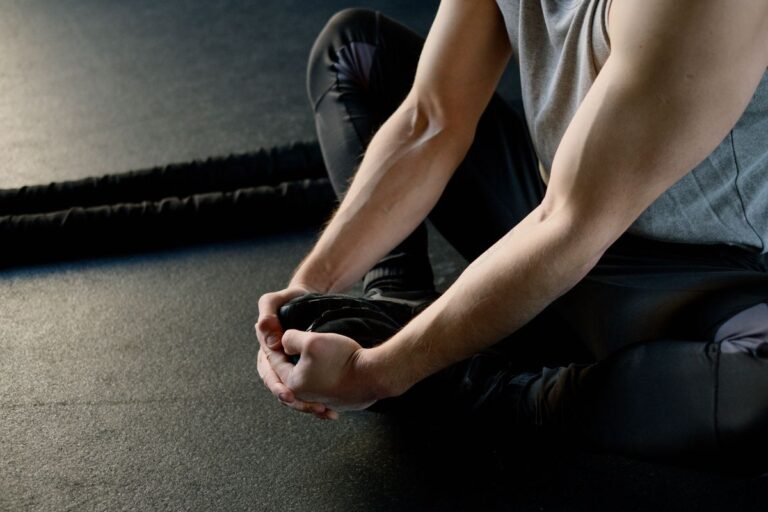
2. 90/90 hip switch. Sit on the floor with one leg bent in front of you at 90 degrees and the other bent behind you at 90 degrees. Keep your torso tall and slowly rotate your hips to switch sides without using your hands. Perform 10 switches per side. This drill improves both internal and external rotation in a controlled way.
3. Frog stretch. Start on all fours and widen your knees as far as comfortable, keeping your ankles in line with your knees. Sink your hips back toward your heels while keeping your chest up. Hold for 60 to 90 seconds. This targets hip adduction and inner thigh mobility, which is often neglected.
4. Banded hip distraction. Attach a light resistance band to a sturdy post at hip height. Step into the band so it sits across the front of your hip. Step away from the anchor to create tension, then perform slow lunges or leg swings. The band creates space in the hip joint, allowing the femur to glide more freely. Perform 10 to 15 slow reps per side.
5. Cossack squat. Stand with your feet wide. Shift your weight to one side and bend that knee while keeping the other leg straight with the heel on the ground. Keep your chest up and sink as low as you can with control. Alternate sides for 8 to 10 reps. This builds active mobility, strength, and control through a wide range of motion.
Programming Hip Mobility Into Your Training
Mobility work only works if you do it consistently. The good news is that you do not need an hour-long routine. Ten to fifteen minutes before training or on rest days is enough for most people. The key is to target the movements you need for your sport or goals.
Before a squat session, prioritize hip flexor stretching, deep squat holds, and 90/90 switches. Before a deadlift session, focus on hip extension with couch stretches and banded distractions. On rest days, use a broader routine that includes all five drills. Pair this with active recovery, like walking or light cycling, to reinforce the new range of motion.
Strength training itself is one of the best mobility tools available. Squatting deep with good form, doing Bulgarian split squats, and performing Romanian deadlifts through a full range all build mobility under load. This is often more effective than passive stretching because it teaches your nervous system that the new range of motion is safe and usable. Our guide to the best compound exercises covers these movements in detail.
How Long Until You See Results?
Mobility improvements happen on different timelines. You can often feel looser within a single session because the nervous system relaxes and allows more range of motion. However, lasting tissue adaptation takes weeks or months of consistent work. A 2017 study in the Journal of Sports Rehabilitation found that consistent hip mobility training produced meaningful improvements in squat depth and movement quality after four to six weeks.
The most important variable is consistency. Doing mobility work once a week will produce minimal results. Doing it for 10 minutes before every training session, plus one dedicated session on a rest day, will produce noticeable changes within a month. Track your progress with the deep squat test or the Thomas test every two weeks to stay motivated.
Hip mobility is not a quick fix, but it is one of the highest-return investments you can make in your physical health. Better hips mean better squats, less back pain, healthier knees, and easier movement in daily life. Start with the assessments, add the drills that address your limitations, and stay consistent. Your body will thank you.