5 Daily Stretches That Actually Improve Your Squat
A deep, strong squat depends on mobility across several joints working together. If your ankles, hips, or upper back are tight, your squat depth drops, your torso pitches forward, and your lower back takes over the work your legs should be doing. The good news is that the most common squat restrictions are remarkably consistent from person to person, which means a small set of stretches covers the majority of problems.
These five stretches target the specific restrictions that hold most lifters back. Done together they take under ten minutes, and most of them can be performed while you watch television or cool down after a workout. Use them daily for two to three weeks and you will likely notice a smoother, deeper, more comfortable squat.
1. Deep Squat Hold
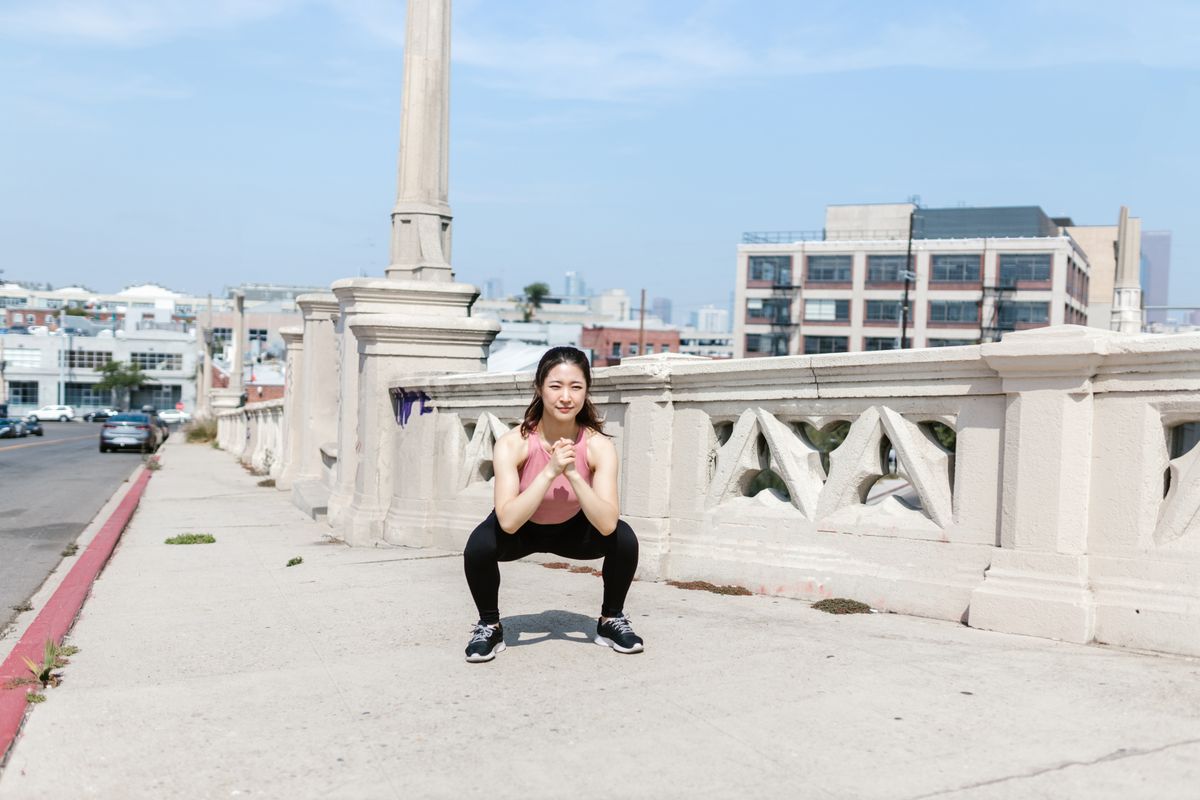
Drop into the bottom position of a bodyweight squat with your feet roughly shoulder-width apart, your heels flat on the floor, and your chest up. If your heels want to rise, place a small wedge or a folded towel under them and work on lowering the support over time. Hold the bottom position for 30 to 60 seconds, breathing slowly and relaxing into the depth. Use your elbows to gently push your knees outward if they want to collapse inward.
This drill is uniquely effective because it trains mobility in the exact position the squat demands. It opens the hips, builds ankle dorsiflexion, and teaches your body that the bottom of the squat is a safe place to be. Spending time in the bottom also stretches the calves, the adductors, and the glutes simultaneously, which no isolated stretch can match. Try to accumulate two to three minutes of total bottom-of-squat time each day, even if it is broken into shorter holds.
2. Couch Stretch
Place one knee on the floor against a wall or the seat of a couch, with your shin running up the wall so your foot points toward the ceiling. Step the other foot forward into a lunge position, with that front shin roughly vertical. Squeeze the glute of the back leg hard and shift your weight gently forward until you feel a stretch along the front of the hip and thigh of the back leg. Hold for 45 to 60 seconds per side, breathing steadily.
The couch stretch targets the hip flexors and the quadriceps, which shorten and tighten from hours of sitting. Tight hip flexors pull your pelvis forward into an anterior tilt, which limits how deeply you can squat and forces your lower back to overarch under load. Squeezing the glute is essential: it creates reciprocal inhibition, which tells the tight hip flexor to release, and it trains the muscles that should be doing the opposite job. This stretch is uncomfortable for almost everyone the first few times, so ease into it and let the intensity come down over a week or two.
3. Ankle Dorsiflexion Stretch
Stand facing a wall in a staggered stance with the foot you want to stretch a few inches from the wall. Keep your heel firmly on the floor and bend your front knee, driving it toward the wall. Continue until you feel a stretch in the front of the ankle or the lower calf, just above the heel. Hold for 30 seconds per side, then repeat for a second set.
Limited ankle dorsiflexion is the single most common physical reason people cannot squat deep. When your shin cannot travel far enough forward over your foot, your body compensates by lifting the heels or pitching the torso forward, and both wreck your squat. This stretch directly targets that restriction. For an added challenge, once you can reach the wall easily, move your foot back half an inch and repeat. The knee-to-wall drill also doubles as a daily self-test: track how far from the wall your foot can be while your heel stays down, and watch that distance grow over a few weeks.
4. Thoracic Spine Windmill
Lie on your side with your knees bent at 90 degrees and stacked, and both arms extended straight out in front of you along the floor, palms together. Keeping your knees pinned, slowly slide your top arm along the floor toward your chest, then sweep it overhead and around behind you in a wide arc, tracing as large a circle as you can while you rotate through your upper back. Try to lay the back of that arm and hand on the floor behind you. Bring the arm back the same way. Do 8 to 10 slow repetitions per side.
A stiff thoracic spine, the middle and upper back, is the hidden culprit behind many squat problems. When your upper back will not extend, your chest collapses forward at the bottom of the squat, the bar drifts over your toes, and your lower back rounds under load. The windmill restores rotation and extension through the thoracic spine, which lets you hold your chest up and keep the bar over the middle of your foot throughout the lift. It also feels good, which makes it an easy habit to keep.
5. 90/90 Hip Switch
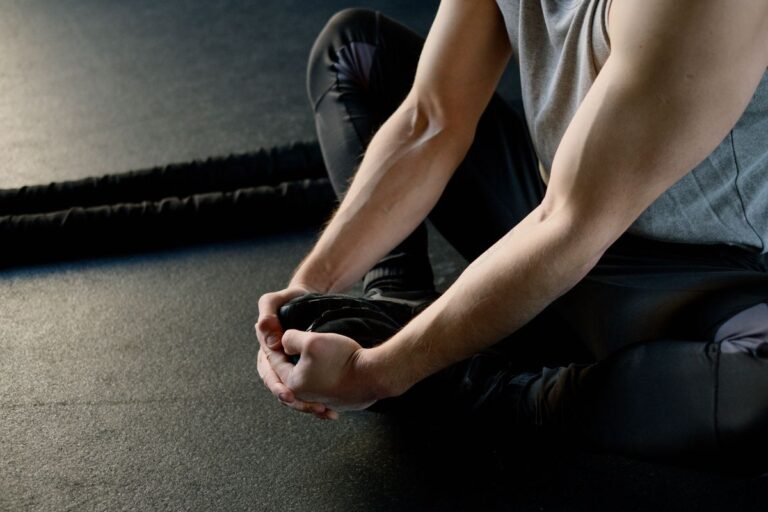
Sit on the floor with one leg in front of you and one leg behind, each bent at roughly 90 degrees, so your front shin points across your body and your back shin points out to the side. Sit tall and gently let your knees fall toward the floor on each side without forcing them. To switch, lift your knees and rotate both legs together to the opposite 90/90 position. Move slowly and with control for 8 to 10 switches, focusing on rotating through the hips rather than rounding the spine.
Hip rotation is essential for a stable, upright squat. If your hips cannot rotate, your knees tend to collapse inward at the bottom of the squat, a position known as valgus that places uneven stress on the knee joints. The 90/90 drill trains both internal and external hip rotation in the same movement, which builds the control you need to keep your knees tracking in line with your toes under load. It can be humbling at first; many adults have very limited hip rotation from years of sitting, and that is exactly why this stretch earns its place on the list.
How to Use These Five Together
Run through all five as a daily routine, ideally after a workout or a warm shower when your tissues are most responsive. The full sequence takes about eight to ten minutes. You do not need to hold each stretch to the point of pain; aim for a firm, sustainable sensation and let your range improve gradually. Breathe slowly throughout, because holding your breath tightens the muscles you are trying to release.
If you are short on time, pick the one or two stretches that address your biggest restriction and do them daily rather than doing all five sporadically. Consistency on a single tight area beats infrequent work across all of them. Most people see the fastest gains from prioritizing the ankle dorsiflexion stretch and the deep squat hold, since ankle mobility is the most common and most squat-limiting restriction.
What to Expect
Mobility improves through regular signals, not heroic efforts. With daily work, most lifters feel a noticeably deeper, smoother squat within two to three weeks, and measurable changes in depth and posture within four to six weeks. Re-test your squat periodically: film a side-view bodyweight squat at the start and again after a month of daily stretching, and the difference is usually obvious. Combine this routine with strength work through a full range of motion, and your squat will keep improving for a long time to come.