The Best Compound Exercises for Building Real-World Strength
Compound exercises are movements that use multiple joints and muscle groups at the same time. They give you the most strength per minute of training, build coordination that carries over to real life, and trigger a larger hormonal and neurological response than isolated exercises. If you have limited time and want the biggest return, compound movements are where you should spend almost all of it.
This guide covers the five foundational compound movements that build real-world strength, explains why each matters, and shows you how to start and progress them safely no matter your current level.
Why Compound Exercises Beat Isolation for Most People
An isolation exercise like a biceps curl trains one muscle through one joint. A compound exercise like a pull-up or a row trains the back, the biceps, the forearms, and the core all at once. Because compounds recruit more muscle mass, they build more total strength, burn more calories, improve coordination, and save enormous amounts of time. A workout built around five compound movements delivers more benefit in 40 minutes than a workout of fifteen isolation exercises delivers in 90.
Compounds also train your body the way it actually moves in life. Picking up a child, lifting a box, pushing a heavy door, pulling yourself up, carrying groceries: these are all compound movements. Training them in the gym makes you better at the physical demands of daily life, which is the definition of functional strength. Isolation work has its place for bodybuilding or rehab, but it should never be the foundation of a general strength program.
1. The Squat
The squat is the king of lower-body exercises. It builds strength in the quadriceps, glutes, and hamstrings, develops core stability to hold your torso upright under load, and demands ankle, hip, and thoracic mobility. Few movements train so many qualities at once, which is why every serious strength program includes some form of squat.
Variations let you match the exercise to your level and equipment. The bodyweight squat and the goblet squat, where you hold a single dumbbell or kettlebell at your chest, are ideal for learning the pattern. The front squat loads the front of the body and keeps the torso more upright, while the back squat allows the heaviest loads. Start with bodyweight or a light goblet squat to learn depth, knee tracking, and bracing, then progress by adding weight slowly while keeping your heels down and your chest up.
2. The Deadlift
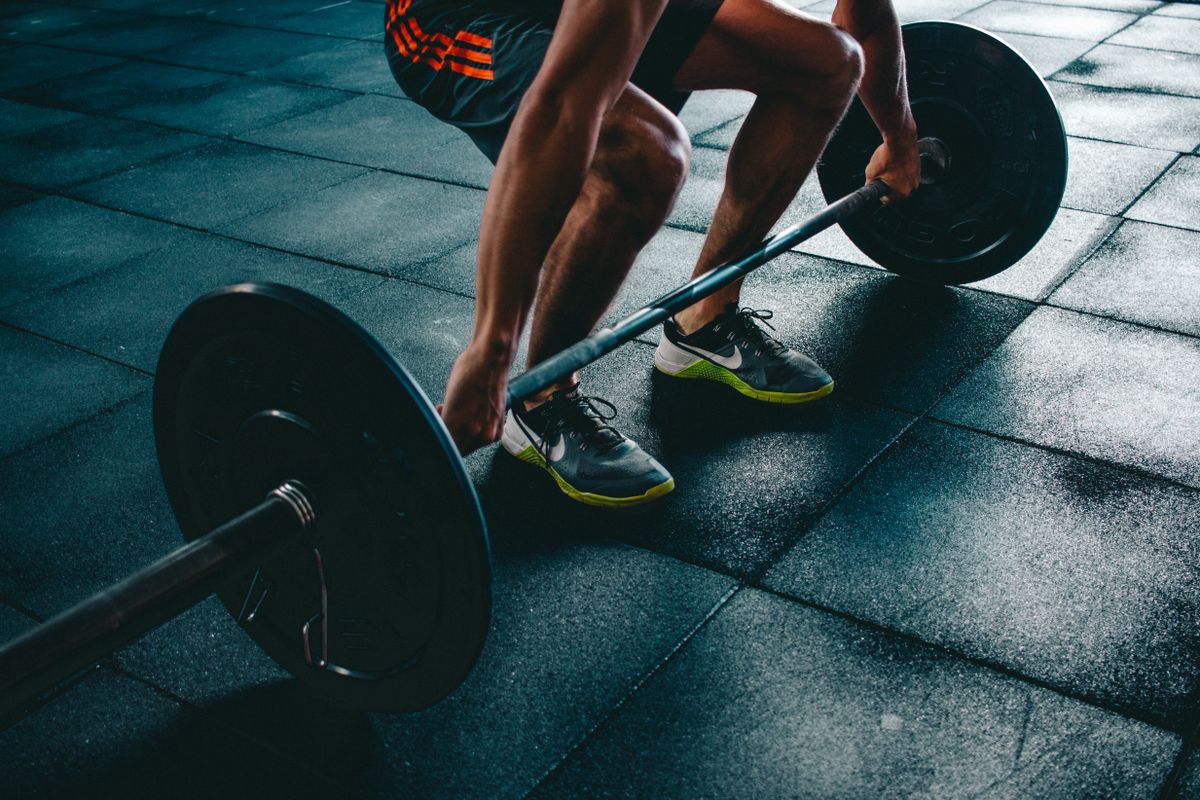
The deadlift trains the posterior chain: the hamstrings, glutes, and the entire back, from the calves up through the upper back and traps. It teaches you to lift a heavy object safely from the ground, a skill you use in some form almost every day, and it builds the kind of full-body strength that makes everything else feel lighter.
The conventional deadlift from the floor is the classic version, but it is also the most technically demanding. Beginners often do better starting with a Romanian deadlift, which keeps the weight closer to the body and emphasizes the hip hinge pattern, or a trap-bar deadlift, which is more forgiving on the lower back. Whatever variation you choose, learn the hip hinge first: soft knees, push the hips back, neutral spine, weight through the midfoot. Mastering this one pattern protects your back for life.
3. The Push-Up and Bench Press
Push-ups and bench presses build pressing strength for the chest, shoulders, and triceps. The push-up is the best starting point for almost everyone: it is scalable, requires no equipment, and trains the core simultaneously because you must hold a rigid plank throughout each rep. If standard push-ups are too hard, elevate your hands on a bench or wall; if they are too easy, slow them down or progress to harder variations.
The bench press allows heavier loading as you advance and is the primary horizontal press in most strength programs. It demands a stable shoulder position, a controlled descent, and a controlled drive up. Whichever you use, the goal is the same: build a strong, stable press that carries over to pushing doors, getting up from the floor, and protecting your shoulders through decades of use.
4. The Row
Rows strengthen the upper back, the lats, and the biceps while improving posture. A strong back supports every other lift and directly counters the rounded, hunched position that comes from hours of sitting and screen use. For most modern adults, the row is the most important upper-body movement to prioritize, because pulling strength is almost always underdeveloped relative to pressing strength.
There are many variations. The dumbbell row, done with one hand braced on a bench, is accessible and lets you focus on one side at a time. The barbell row loads the pattern more heavily. The inverted row, done under a bar or ring set waist height, uses your bodyweight and scales easily. Suspension trainer rows and seated cable rows are also excellent. Pick one that fits your equipment and learn to pull with your back rather than yanking with your arms, squeezing the shoulder blades together at the top of each rep.
5. The Overhead Press
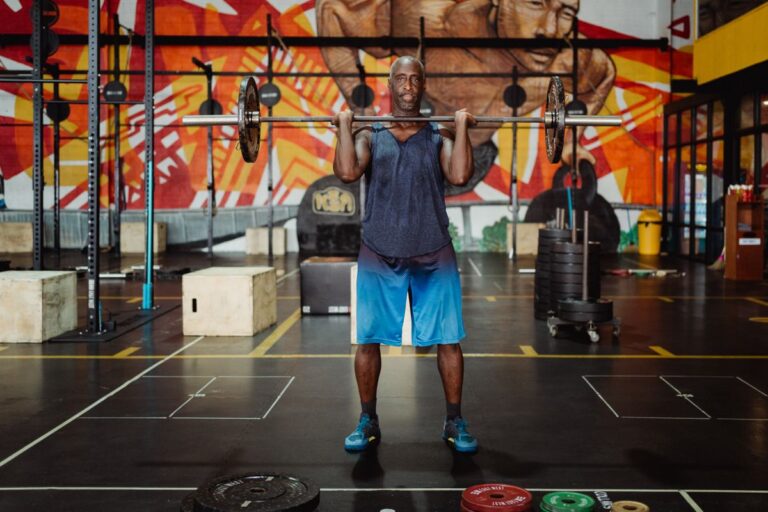
The overhead press builds shoulder strength, upper back stability, and core control as you drive a weight from your shoulders to full lockout overhead. It is one of the most functional upper-body movements you can train, because reaching and lifting overhead is something your shoulders were designed to do and that most people lose the ability to perform well over time.
Start with a dumbbell overhead press, which allows the arms to move more naturally and is more forgiving on the shoulders than a barbell. Keep your ribs down and your core braced so you press overhead without arching your lower back. As you get stronger, you can progress to a barbell press or a push press, which adds a slight leg drive to move more weight. Pair overhead pressing with regular rowing to keep the shoulders balanced and healthy.
How to Progress Over Time
Strength is built through progressive overload: gradually increasing the demand on your muscles over time. The simplest way to do this is to add a small amount of weight, or complete one more rep with the same weight, when your current weight feels manageable for all your sets with clean form. Track your lifts in a notebook or app so you know what to beat next time. Even tiny weekly additions compound into large gains over a year.
Progress is not linear. Some weeks you will add weight easily, others you will stall. When you plateau on a lift, change one variable at a time: add a rep, add a set, improve your technique, or deload for a week to recover. Patience and consistency beat aggressive jumps every time. Your tendons and joints adapt more slowly than your muscles, so a weight that your muscles can handle may still stress your connective tissues if you rush it.
Putting It All Together
A simple, effective full-body session uses one exercise from each category: a squat, a hinge, a push, a pull, and an overhead press. Three to five sets of five to ten reps per exercise, two to three times per week, with progressive overload over months, will build more real-world strength than almost any complicated routine. Add a carry or core exercise if you have time, and you have a complete program.
Master these five movements and you have the foundation for almost any strength goal, whether that is carrying your groceries without thinking, hiking with your kids, or eventually moving serious weight. Add load slowly, recover well, stay consistent, and let the months and years turn a simple plan into remarkable strength.